Table of Contents
Build Real Apps & Web with GenCodex
Transform your ideas into scalable solutions with a powerful low-code platform
Get StartedLook closely at today’s hyper-speed digital economy, and one thing becomes glaringly obvious the hunger for enterprise software and custom web applications is off the charts. Traditionally, software engineering meant hand coding every single line a grind that often struggles to keep up with aggressive product launch deadlines, leaving teams buried in technical debt while fighting a massive developer shortage. Enter low-code development.
It has stepped up as the ultimate equalizer, bridging the gap and giving organizations a massive head start to ship high-performance, enterprise-grade apps in a fraction of the usual time.
By fusing drag-and-drop visual interfaces with automated backend logic and deployment tools, low-code platforms create a space where battle-tested engineers and business experts can collaborate seamlessly. Platforms like GenCodex AI push this idea even further, baking Generative AI directly into every single phase of the software development lifecycle (SDLC).
Top Features of GenCodex for Low-Code Development and Deployment
Gencodex AI steps up as a full-spectrum, AI-fueled low-code platform built to tackle every stage of app creation from brainstorming and automated SRS documentation to full-stack code synthesis and cloud deployment. Here are five core features that make the Gencodex ecosystem tick.
1. Gencodex Visual UI Builder
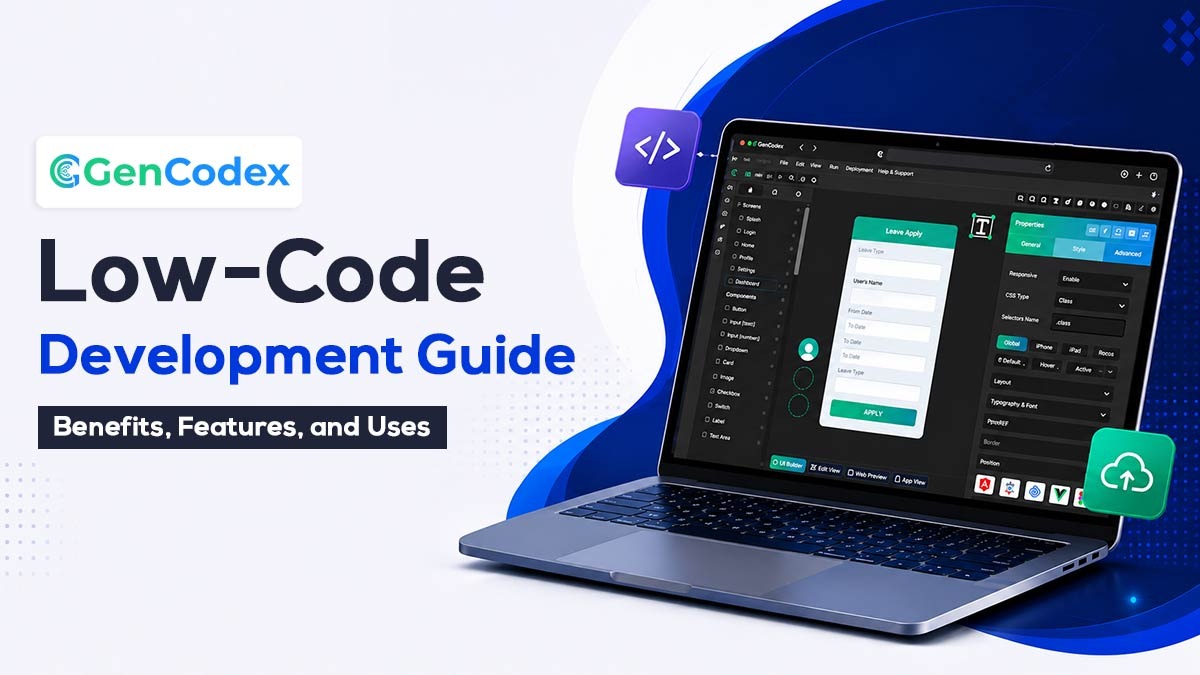
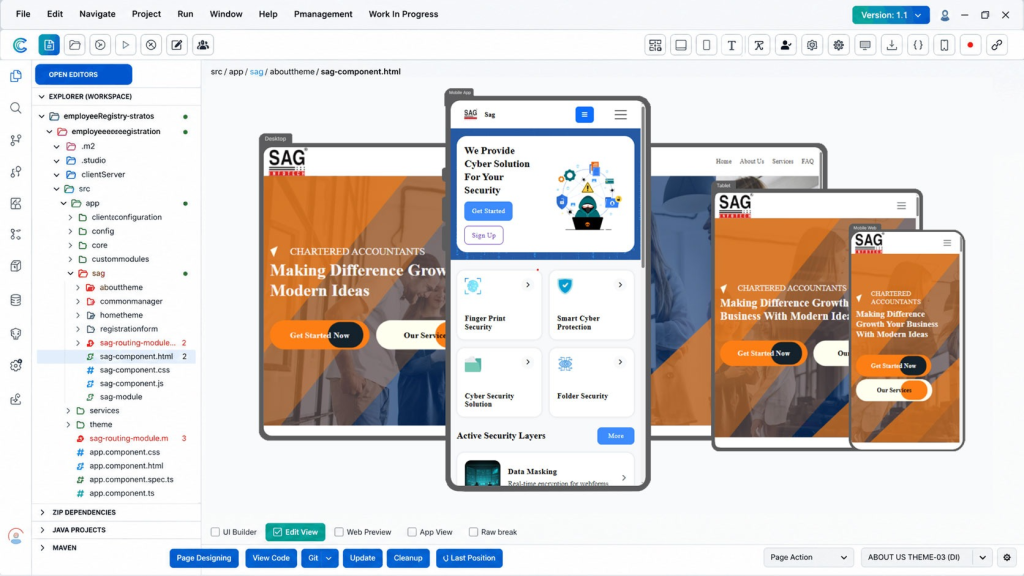
The GenCodex low code platform completely flips how developers and designers construct interfaces. Instead of wrestling with manual CSS grids or messy HTML/JSX boilerplate, you can visually design gorgeous, responsive UIs while keeping total control over the underlying code.
Key Capabilities:
- Drag-and-Drop Component Canvas: Effortlessly drop forms, data grids, navbars, and interactive widgets straight onto your workspace.
- Theme & Typography Controls: Instantly toggle themes (like Light/Dark modes) and set universal typography and colour schemes across your entire app.
- Custom Code Separation: Automatically generated UI components can be customized or extended with your own manual code anytime bespoke requirements pop up.
- Multi-Framework Output: Design it once and export it to popular modern front-end frameworks like Angular, React, and Vue.js.
2. Gencodex Generative AI Capabilities
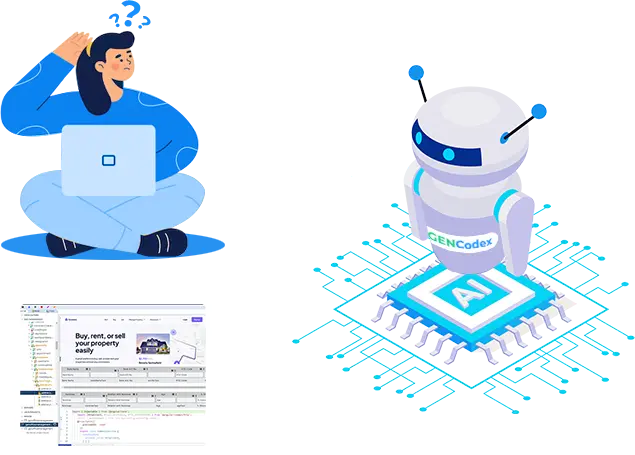
By weaving cutting-edge Generative AI directly into the low-code workflow, Gencodex slashes manual engineering overhead. Think of it as an intelligent co-pilot that translates plain-English requirements into functional architecture and execution logic.
Key Capabilities:
- Automated SRS Generation: Turn high-level pitches into comprehensive, SEO-optimized Software Requirements Specifications (SRS) in minutes.
- Architecture & Flowchart Diagrams: Auto-generate Data Flow Diagrams (DFDs), Activity Diagrams, Flowcharts, and Use Cases straight from your initial specs.
- Smart Code Synthesis & Debugging: Churn out clean, maintainable backend code complete with built-in IDE breakpoint debugging and automated variable inspection.
- Interactive Clarification Engine: The AI asks clarifying questions to ensure your system specs perfectly match your business logic before writing a single line of code.
3. Gencodex Software Application Development Engine
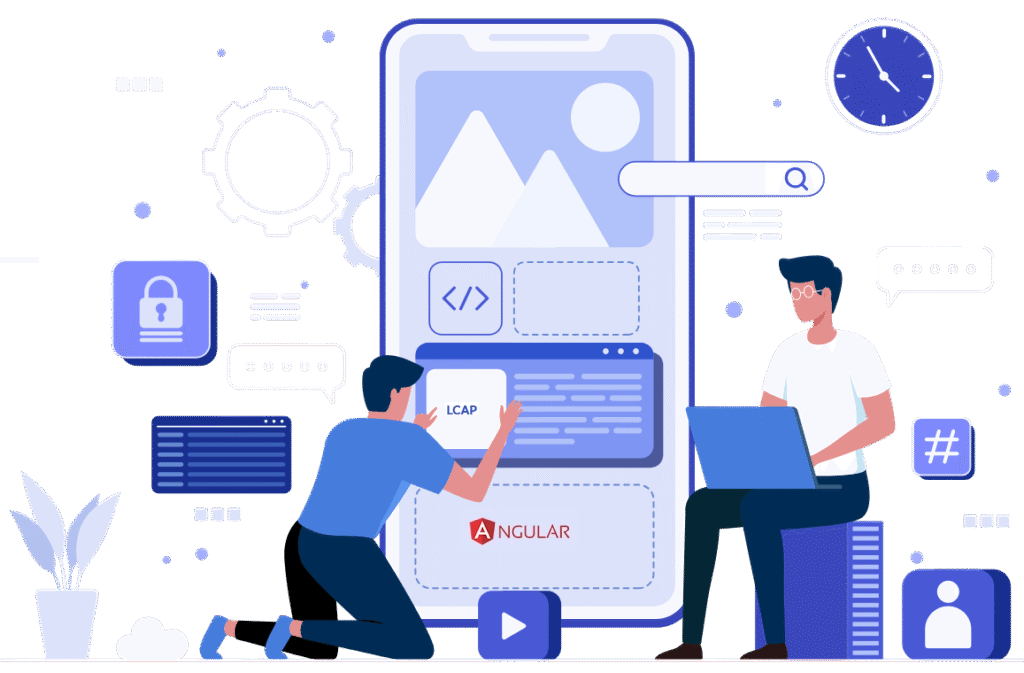
This Builder offers a flexible, full-stack environment built specifically for scalable application creation. It thrives in multi-language, multi-database setups, ensuring enterprise teams are never boxed into a single proprietary tech stack.
Key Capabilities:
- Multi-Language Support: Engineer heavy-duty apps using core enterprise languages like Java, C#, and Python.
- Multi-Database Compatibility: Hook up and manage databases effortlessly across MySQL, MongoDB, SQL Server, Oracle, and SQLite.
- Cross-Platform Compatibility: Spit out a single codebase ready to run on Windows, macOS, Linux, Android, and iOS.
- Technology Version Migration: Auto-upgrade or downgrade your tech stack (like jumping from Java 8 to Java 21) without shattering project dependencies.
4. Inbuilt Solutions
To keep developer velocity running hot, Gencodex Inbuilt Solutions packs a library of pre-built templates, pre-configured database adapters, and standardized modules for those repetitive application patterns.
Key Capabilities:
- Pre-Designed Functional Templates: Grab production-ready templates for ERPs, CRM modules, admin dashboards, and custom portals.
- Pre-Built Component Library: Inject ready-to-go user authentication, role-based access control (RBAC), and reporting modules directly into your build.
- Low-Code API Builder: Rapidly spin up, expose, and manage RESTful APIs to connect microservices and third-party SaaS platforms.
- Automated CRUD Generation: Instantly whip up Create, Read, Update, and Delete operations for database entities with zero manual coding.
Read Also : Top Low Code Development Platforms for Applications
5. Gencodex Automated Deployment Tool
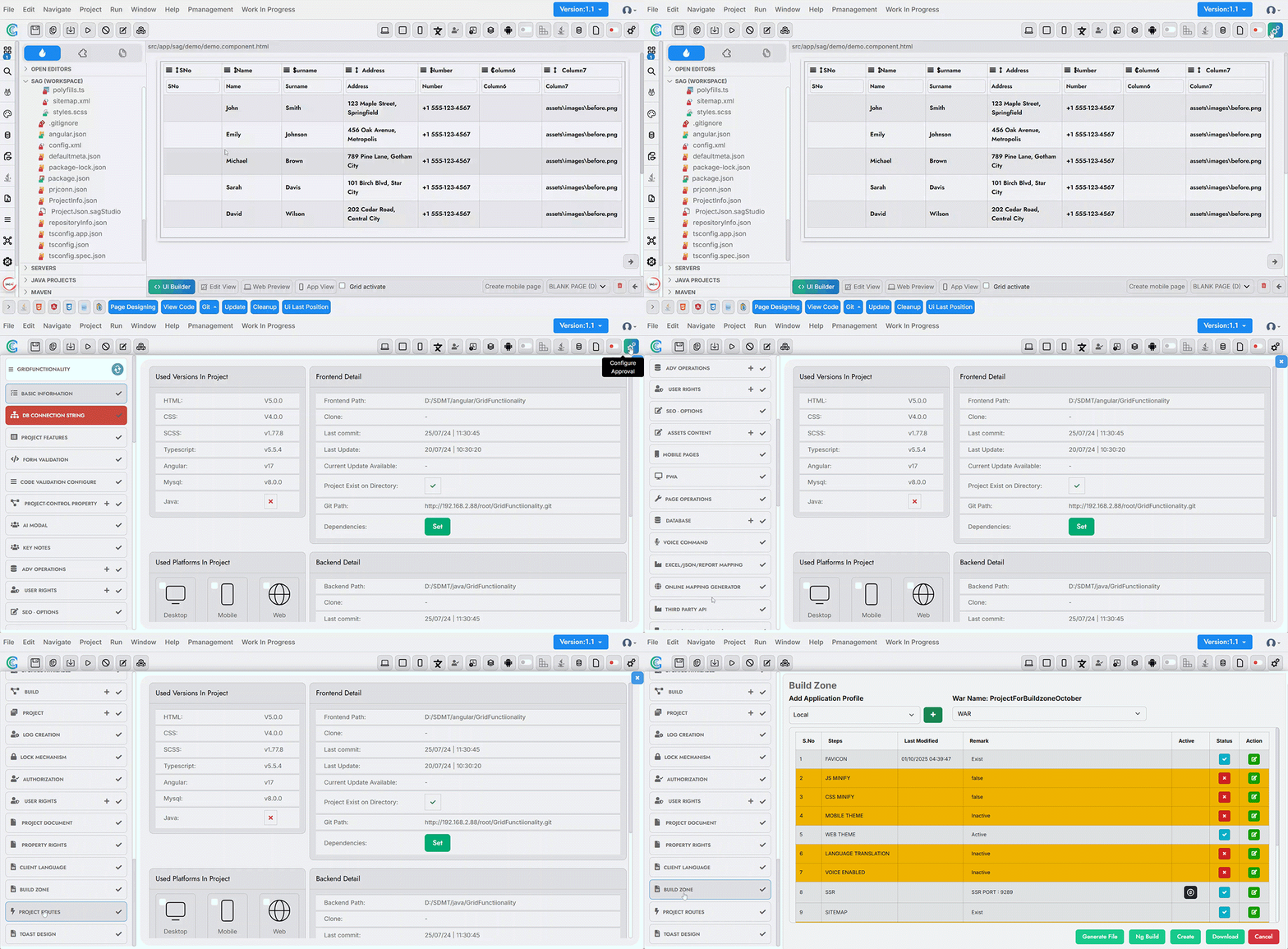
Building the app is only half the fight; getting it into production smoothly and securely is just as vital. The Gencodex Deployment Tool streamlines the jump from development to production through automated release management.
Key Capabilities:
- Cloud & On-Premise Deployment: Push your compiled apps flawlessly to major cloud providers or your own local enterprise hardware.
- Automated CI/CD Workflows: Hook up your version control to auto-sync with GitHub repos for continuous integration and deployment.
- Built-In Microservice Architecture: Roll out lightweight, high-performance microservices built to handle massive enterprise traffic spikes.
- Application Monitoring & Performance Metrics: Keep an eye on system health, run automated tests, and track real-time analytics from one unified dashboard.
“As an IT department, or as a business, you just want everything faster. It’s all about speed.”
— Chris Obdam, CEO, Betty Blocks
Benefits of Low-Code Development
Low-code development is entirely rewriting how organizations build software, driving massive business value through five distinct advantages:
- Accelerated Time-to-Market: By swapping tedious line-by-line coding for visual builders and automated generators, low-code platforms shrink dev cycles from agonizing months down to mere weeks, or even days.
- Significant Cost Reduction: Slashing manual coding hours drops software overhead dramatically, letting lean development teams match the output of massive engineering departments.
- Seamless Alignment Between Business and IT: Visual interfaces let non-technical domain experts jump right into the design process, guaranteeing the final product actually hits the business goals.
- Reduced Technical Debt & High Quality: Automated code generation sticks to industry best practices, resulting in clean, bug-free code that keeps long-term maintenance costs low.
- Enhanced Agility & Scalability: Companies can pivot app logic, swap databases, or roll out new features on the fly to meet shifting market demands and user feedback.
What Can You Build With Low-Code?
Today’s low-code platforms are way past basic web forms or static sites. With a powerhouse like Gencodex, enterprise teams can architect incredibly complex digital ecosystems:
- ERP & CRM Systems: Bespoke business management apps tuned to your specific workflows, tracking everything from supply chains to sales pipelines.
- Customer-Facing Portals & E-Commerce: Secure, snappy web apps where users can seamlessly manage subscriptions, track shipments, or access support.
- Cross-Platform Mobile Apps: Native and hybrid mobile experiences for iOS and Android featuring push notifications, offline syncing, and direct hardware access.
- Workflow Automation & Internal Tools: Productivity tools designed to kill repetitive tasks, handle approval routing, and digitize ancient paper trails.
- Microservices & Legacy Upgrades: Modern API wrappers that breathe new life into legacy databases without forcing a terrifying, ground-up system rewrite.
Who Usex Low-Code Development?
Low-code platforms hand the keys to a surprisingly broad spectrum of creators, no matter their technical background:
- Professional Software Engineers: Veteran coders use low-code to automate the boring boilerplate stuff, freeing up brainpower for complex custom logic and architectural magic.
- Citizen Developers & Business Analysts: Non-technical pros lean on drag-and-drop tools to spin up departmental apps without waiting on a backed-up IT queue.
- Startups & Tech Entrepreneurs: Founders leverage these platforms to sprint toward Minimum Viable Products (MVPs), validating big ideas for pennies on the dollar.
- IT Leaders & CTOs: Tech execs roll out low-code to clear project backlogs, standardize architecture across the enterprise, and enforce tight governance.
- Students & Aspiring Developers: Educators use low-code to teach hands-on full-stack development, moving students smoothly from visual models to real production code.
How To Choose A Low-Code Platform
Picking the right low-code engine requires a hard look at your technical standards, scaling ambitions, and enterprise rules:
- Code Ownership & Customization Freedom: Make sure the platform lets you inject custom code and export everything. You never want to be trapped in a closed-source, proprietary cage.
- Multi-Language & Multi-Database Versatility: Find a platform that plays nicely with major languages (Java, Python, C#) and plugs seamlessly into your current relational and non-relational databases.
- Advanced AI Integration & Automation: Demand more than static drag-and-drop tools. Look for platforms using Generative AI for real-time SRS documentation, smart code suggestions, and automated testing.
- Flexible Deployment Options: Ensure the platform can handle both cloud hosting and on-prem deployments, backed by automated CI/CD pipelines for GitHub or GitLab.
- Enterprise Security & Governance: Double-check for rock-solid role-based access controls (RBAC) and compliance checks, ensuring the platform can securely handle massive user spikes.
Final Thoughts
Low-code development guide is fundamentally rewiring how applications come to life. Rather than hand-cranking every piece of an app, developers can now orchestrate visual tools, reusable components, AI automation, and custom code into one seamless workflow.
It accelerates and simplifies development while preserving the firepower needed to tackle highly advanced requirements. For beginners, it’s an incredible on-ramp into app building. For startups and enterprises, it’s a cheat code to eliminate repetitive dev cycles. And for the professional engineers out there? It’s a way to clear the deck of boilerplate tasks and focus on the technical challenges that actually matter.
The endgame is brilliantly simple: write less repetitive code, ship products faster, and spend your energy building applications that actually make an impact.
FAQs About GenCodex Low-Code Development
Q.1 – What exactly is a low-code development platform?
Ans.1 – A low-code platform is a software development environment that allows you to create enterprise applications using graphical user interfaces, drag-and-drop builders, and pre-configured templates instead of writing every line of code manually. It drastically accelerates product launches and reduces technical debt.
Q.2 – Do I need to be a professional coding expert to use Gencodex AI?
Ans.2 – No. Gencodex is built for a wide spectrum of users. Citizen developers and business analysts can leverage the Visual UI Builder to design interfaces without coding. At the same time, professional software engineers can use the platform to automate repetitive boilerplate code, allowing them to focus on complex custom logic.
Q.3 – What kind of applications can I build with Gencodex?
Ans.3 – You can build highly scalable, enterprise-grade applications. Common projects include Enterprise Resource Planning (ERP) systems, CRM dashboards, cross-platform mobile apps for iOS and Android, customer portals, and internal workflow automation tools. The Inbuilt Solutions library provides templates to help you deploy these systems instantly.
Q.4 – Will using Gencodex lock my business into a specific technology stack?
Ans.4 – Not at all. The Software Application Development Engine is highly flexible, supporting multiple programming languages (Java, C#, Python) and multi-database connectivity (MySQL, MongoDB, Oracle). Gencodex prioritizes developer freedom, allowing you to easily customize, separate, and export your underlying code.
Q.5 – How does Generative AI enhance the Gencodex platform?
Ans.5 – Gencodex embeds Generative AI directly into the software development lifecycle. It acts as an intelligent co-pilot that can automatically generate Software Requirements Specifications (SRS), build visual system architecture diagrams, and synthesize backend code directly from plain-language text prompts.
Q.6 – How easy is it to connect my new application to existing third-party services?
Ans.6 – Integration is completely streamlined using the Gencodex API Generator. It allows teams to automatically generate, secure, and manage RESTful APIs with zero manual coding. This makes it effortless to connect your application to external SaaS platforms, payment gateways, and legacy microservices.
Q.7 – Does Gencodex help with launching the app, or just building it?
Ans.7 – Gencodex handles the entire lifecycle, including launch. The Automated Deployment Tool simplifies the transition to production by supporting both cloud and on-premise deployments. It features automated CI/CD pipeline integrations and built-in performance monitoring to ensure your application remains stable under heavy user traffic.