Table of Contents
In the current digital ecosystem, it is becoming increasingly challenging to participate in high-level discussions regarding artificial intelligence without encountering terms such as “AI agents” and “AI assistants.” These concepts are dominating boardrooms and developer discords alike. However, for many business leaders, product managers, and customer success teams, the distinction remains blurry. These conversations often leave stakeholders wondering: What exactly are these technologies? How do they differ at a fundamental architecture level, and which one will actually drive ROI for my business?
In this comprehensive guide, we will clarify the nuances between each AI application. We will explore their technical underpinnings and explain their practical, high-value uses for customer sales, success, and support teams. Furthermore, we will examine why GenCodex has strategically prioritised the development of advanced AI Assistants to solve real-world enterprise challenges.
What is the Core Differentiation?
Both agents and assistants are sophisticated applications of artificial intelligence that businesses use every day to accomplish tasks and accelerate their work, but they operate with vastly different mandates and capabilities.
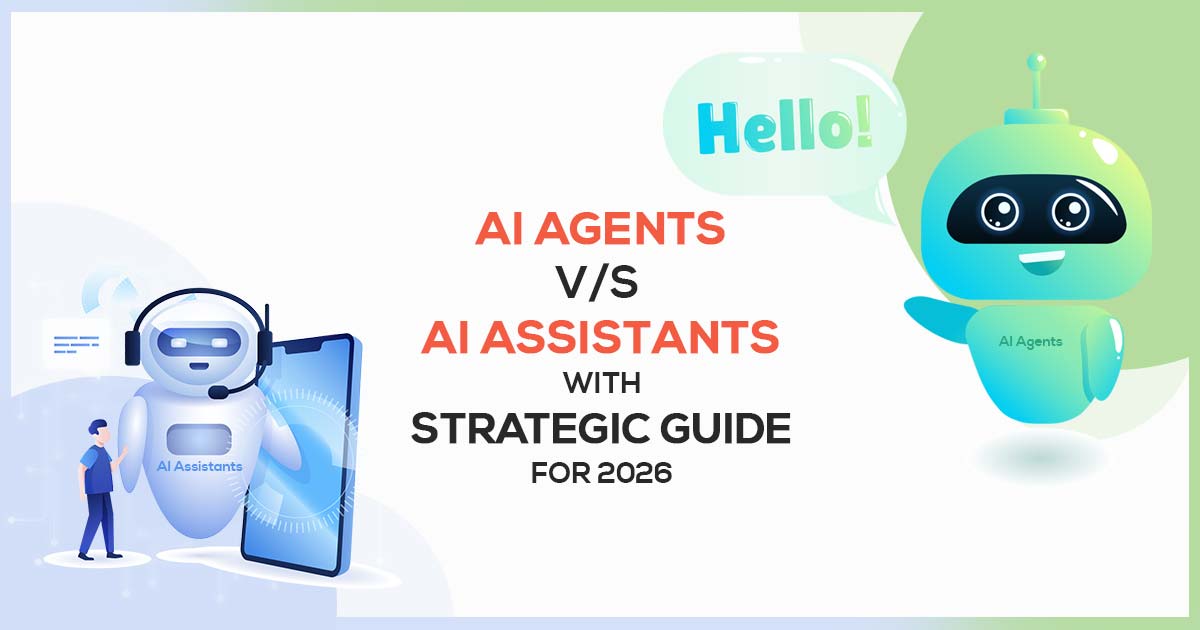
Fundamentally, AI agents possess the ability and authorisation to act autonomously. They are designed to execute actions in pursuit of a complex goal without direct human intervention, often traversing multiple steps to get there. Conversely, AI assistants are designed to provide intelligent input, summaries, and recommendations to human operators, who ultimately remain the “drivers” executing the tasks.
What is an AI Agent?
An AI agent is a software entity engineered to act autonomously, making decisions and performing tasks with minimal or zero human intervention. Unlike traditional automation scripts, which follow a linear if-this-then-that logic, Agents are proactive. They possess a degree of reasoning capability, allowing them to take action without direct prompts. This makes AI agents uniquely useful for multistep workflows, especially those that must interact with other complex systems or uncertain environments.
As of 2026, agents are primarily used for high-level process automation and decision-making. We see this in consumer technology (like Alexa managing smart homes) or industrial applications (autonomous vehicles navigating traffic). However, in the enterprise sector, they are being deployed to interact with humans or other AI agents to perform complex administrative tasks. This includes negotiating meeting times via email, qualifying sales leads based on vague criteria, proactively reaching out to at-risk customers, or booking travel accommodations across multiple platforms.
Because they are autonomous, agents present a significant risk profile. Without constant human oversight, an agent might hallucinate a policy or execute a transaction erroneously.
The Agent Architecture: Sense, Process, Actuate
Agents possess critical technical characteristics that differentiate them from standard chatbots. They can be triggered from other systems via an event-driven model. They can also interact with external data sources (in some advanced cases, experimenting to build and test their own APIs) to perform actions or receive more information for processing, such as part of a RAG (Retrieval-Augmented Generation) pipeline.
To understand the agent workflow, a robotics analogy is highly effective:
- Sense: Agents must first perceive their environment. They do this via sensors either physical (cameras, LIDAR) or virtual (reading a CRM database, monitoring an email inbox, or polling an API endpoint).
- Process: Utilising real-time information retrieved from their sensors, agents apply logic models to become context-aware. This allows them to make decisions that are significantly more nuanced than non-AI systems or isolated AI models that cannot interact with external data sources.
- Actuate: After processing data and reaching a decision, the agent interacts with its environment by operating “levers.” These levers can be physical mechanisms or purely virtual actions, such as sending an HTTP request to write a new value to a database or triggering a webhook.
Crucially, after changing their environment, agents use their sensors to “see” what happened. They take that feedback into account when deciding which action to take next. This feedback loop allows agents to learn through trial and error, improving over time.
Read Also: How Developers Handle Lots of API Requests Without Crashes?
What is an AI Assistant?
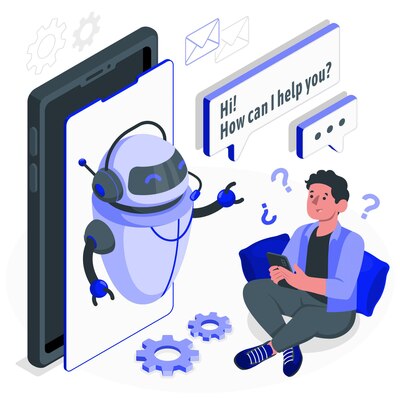
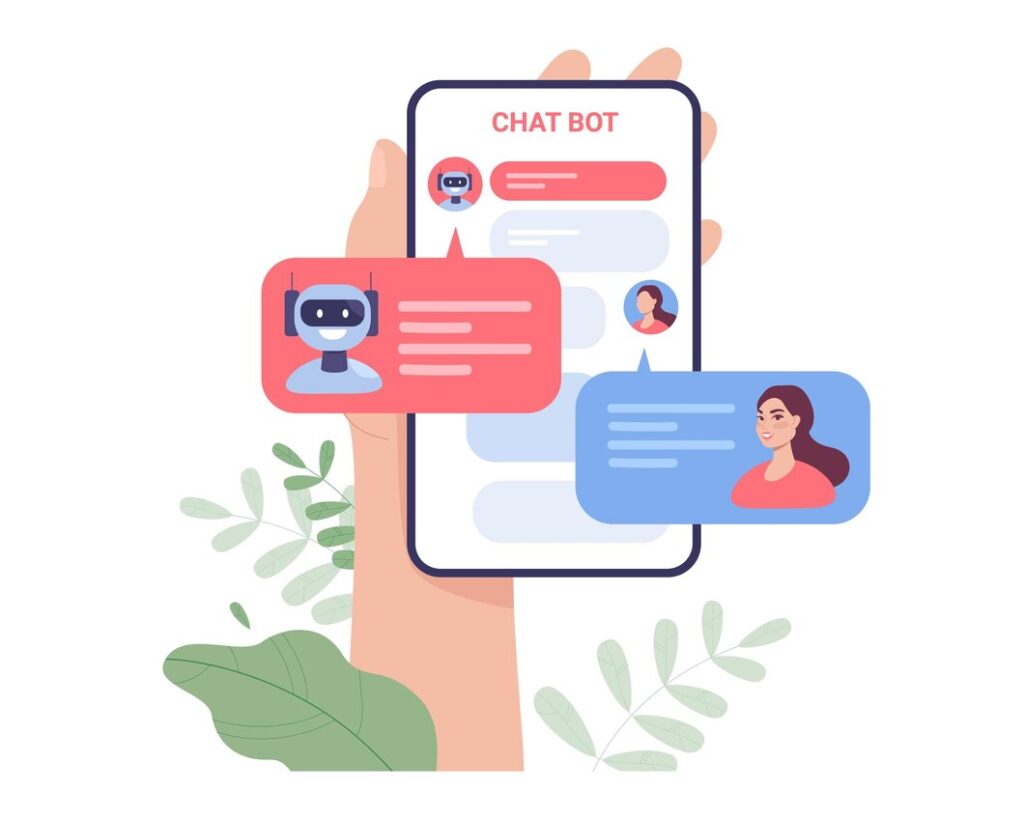
An AI assistant, on the other hand, is a tool leveraging AI to augment a human user, typically through a conversational chat interface. These tools are fundamentally reactive; they always need a human to initiate a conversation or query. This makes them incredibly powerful for accelerating the productivity of humans in doing the work they are already doing, acting as a “force multiplier” rather than a replacement.
While assistants offer more limited autonomy than a fully independent agent, they offer superior control and accuracy because the human is always the final arbiter of truth.
Why AI Assistants Excel in High-Stakes Environments:
- Drafting & Communication: For example, using an LLM to draft a response to a concerned customer. The assistant can ensure the correct brand tone and reference the contents of previous discussions, without the support agent needing to re-read the entire email chain.
- Deep Research: Assistants can search online or through internal vector databases to collate the most important information to answer complex queries.
- Knowledge Retrieval: Utilising semantic search to look for matches in meaning and intent, rather than just exact keyword matches, allowing them to find documentation that a standard search bar would miss.
- Development Acceleration: Coding assistants can easily 10x developer productivity by writing boilerplate code, suggesting refactors, and debugging errors in real-time.
The Hybrid Approach: Human-in-the-Loop (HITL)
There are many workflows where a pure agent or pure assistant is the right choice. However, for most complex enterprise workflows, the industry is converging on a hybrid model: Agentic AI with a Human-in-the-Loop (HITL).
In a HITL configuration, the AI system takes actions based on context and goals (like an AI agent) to prepare the work, but pauses for human approval before “actuating” critical steps. This setup strikes the optimal balance between human oversight (safety/compliance) and the workflow streamlining of agents (speed). This is why forward-thinking businesses are favouring HITL agents over fully autonomous “black box” solutions.
What’s Changing in Software Development?
This year, the line between these technologies is shifting. AI assistants are becoming more autonomous offering the ability to take limited independent actions and interact with third-party software through APIs.
We are also witnessing the rise of multi-agent AI systems in the enterprise. In this architecture, a unified front end (like a chatbot) acts as a controller, directing multiple specialised AI agents that operate independently in the background to solve parts of a larger problem.
On the development side, standardisation is key. We are seeing the rise of protocols like the Model Context Protocol (MCP), an open standard facilitating two-way communication between AI systems (clients) and data sources. This underscores the industry’s move toward standardising how AI tools integrate with the apps knowledge workers use every day.
Why GenCodex focuses on AI Assistants?
In a market flooded with hype about “autonomous workers,” GenCodex has made a strategic decision to focus our platform on high-performance AI Assistants.
Why? Because modern businesses need fast, reliable, and scalable ways to engage users today without increasing operational costs or introducing the liability risks of fully autonomous agents. AI assistants deliver immediate impact by improving customer experiences, accelerating responses, and supporting teams in real-time, making them the most practical and high-ROI AI solution for today’s digital platforms.
Introducing the GenCodex AI Chatbot
The GenCodex AI Chatbot (Assistant) is not just a conversational interface it is a smart digital assistant designed to transform how visitors interact with your digital estate. It goes beyond simple Q&A to guide users through pages, assist with complex form completion, and navigate site architecture. By removing friction from the user journey, the GenCodex chatbot keeps visitors engaged, informed, and confident metrics that directly correlate to higher conversions and stronger brand trust.
Key Capabilities of GenCodex Platform:
24/7 Availability & Scale: The GenCodex AI Chatbot handles high-volume, repetitive inquiries effortlessly. Whether it is questions about pricing tiers, service hours, or technical support, it provides accurate responses instantly, reducing the load on human support queues.
Context-Aware Integration: Unlike generic bots, GenCodex allows companies to easily integrate their own data sources. You can ask the AI chatbot questions about your company’s private data, and it will generate answers that draw on data across multiple linked sources (CRM, Knowledge Base, SQL databases).
Advanced Contact Centre Solutions: We integrate real-time support for human agents, generative AI capabilities, voice interactions, and sentiment analysis. This allows the Assistant to detect when a customer is frustrated and seamlessly hand off the conversation to a human supervisor with full context.
Low-Code Implementation: GenCodex is built on our renowned low-code application platform. This means you can launch automated workflows and deploy sophisticated AI assistants without spending months writing custom code. You can scaffold service-worker templates, retry/caching middleware, and observability hooks directly from the GenCodex interface.
Conclusion
Handling millions of requests and complex customer interactions requires more than just raw computing power it demands smart architecture. By focusing on AI assistants instead of fully autonomous agents, GenCodex offers a solution that is easy to deploy, easy to control, and easy to scale.
Businesses gain the generative power of AI without sacrificing transparency or reliability. With GenCodex, you do not just automate conversations; you create meaningful, results-driven digital experiences that act as a true extension of your team.