Table of Contents
Build Real Apps & Web with GenCodex
Transform your ideas into scalable solutions with a powerful low-code platform
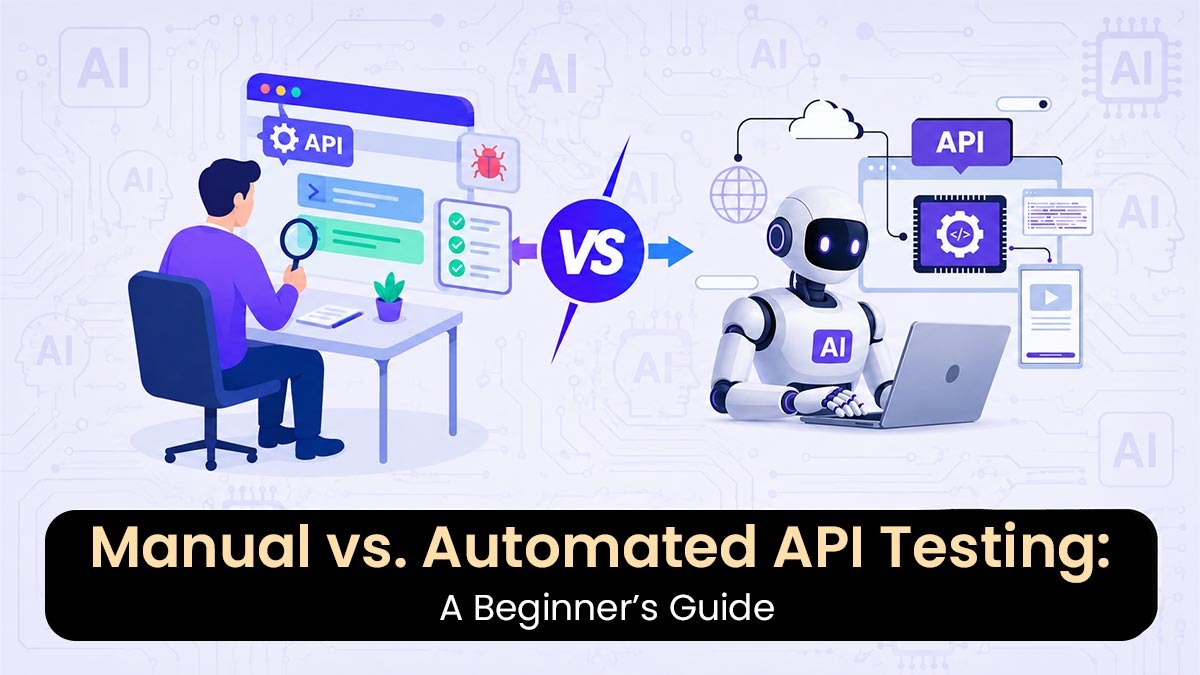
Get StartedEvery quality assurance squad evaluating APIs ultimately confronts a familiar dilemma: do we automate these checks, or execute them by hand? The truthful response relies entirely on your specific targets and rationale.
While AI-driven API testing has radically expanded automation’s capabilities, human-led verification remains indispensable. Recognizing precisely when to deploy each method differentiates a highly effective QA pipeline from a resource-draining one.
If you’re looking to simplify API development and testing, GenCodex’s API Generator can help you automatically generate APIs and reduce the time and effort involved in manual API development and testing.
Understanding Manual API Testing
Hands-on API verification involves real developers testing specific processes to find hidden bugs in software. This method relies on smart problem-solving, making it especially useful for complex or unique features that require careful attention.
Role of Testers in API Testing
Hands-on inspection shines brightest when gut instinct is mandatory. When evaluating how an endpoint behaves, a living developer can instantly recognize and pivot around bizarre anomalies that scripts might ignore. Furthermore, this tactile methodology grants unscripted freedom, letting engineers emulate bizarre, real-world user behaviours with ease.
Pros and Cons of Manual API Testing
| Advantages | Disadvantages |
|---|---|
| Incorporates key cognitive logic into QA processes | It is naturally slow and uses up a lot of resources. |
| Promotes agile, on-the-fly tactical shifts | Naturally vulnerable to accidental oversights |
| Superb for evaluating deeply convoluted backend logic | Prohibitive costs when scaled across massive codebases |
| Catches nuanced flaws that blind algorithms often miss | Severely lacks repeatability and broad scalability |
By grasping the fundamental nuances of human-led validation, software architects can make highly calculated choices regarding exactly when to deploy this tactic within their release cycles.
Automated API Testing Overview
Algorithmic API verification harnesses specialized software to unleash predetermined scripts against your backend architecture. This robust methodology empowers engineering teams to confirm endpoint health, latency, and overall stability in a perpetually repeatable, frictionless fashion.
Automation Principles
Algorithmic backend verification operates heavily on these core tenets:
- Code-Driven Triggers: Scenarios are meticulously crafted as raw code, designed to launch autonomously without any manual babysitting.
- Perpetual Consistency: Scripted validations can fire endlessly, yielding uniform results across staging, testing, and production environments.
- Infinite Expandability: Programmatic checks easily run concurrently, dispersing computational loads across vast server networks.
- Seamless DevOps Synergy: These workflows integrate beautifully into modern CI/CD pipelines, locking down continuous delivery loops seamlessly.
Pros and Cons of Automated API Testing
| Advantages | Disadvantages |
|---|---|
| Highly Streamlined: Scripts run with blistering speed, preserving both engineering hours and budget. | Steep Onboarding: Architecting a durable programmatic framework requires substantial upfront capital and time. |
| Maximized Scope: Code-driven checks effortlessly scan vast endpoint variations, boosting overall QA density | Refactoring Tax: As architectures evolve, test scripts demand continuous tweaking, creating technical debt. |
| Proactive Debugging: Catches critical vulnerabilities instantly post-commit, drastically lowering mitigation expenses. | Cognitive Blindspots: Rigid algorithms fundamentally fail to flag bizarre, subjective UX anomalies. |
| Ironclad Uniformity: Eradicates typos and fatigue, guaranteeing identical test runs. | Steep Learning Curve: Navigating modern automation ecosystems requires specialized developer fluency. |
| Limitless Growth: Effortlessly scales alongside your platform to hammer thousands of endpoints simultaneously. | Environmental Friction: Orchestrating test databases and mock servers can be a logistical headache. |
By weighing the sheer power against the architectural overhead of algorithmic testing, engineering leaders can strategically inject these mechanized workflows into their broader quality assurance roadmaps.
Read Also: How To Develop APIs Using GenCodex Auto API Generator Tool
How Do the Two Approaches Compare Manual and Auto APIs ?
When it comes to testing APIs (which are systems that allow different software to communicate with each other), many teams don’t really see it as a choice between automated testing and manual testing. Instead, it’s more about knowing when to use each method.
Manual API Testing is works best for:
- You need to explore and discover unexpected issues.
- You are in the early stages of development, and the features are still changing frequently.
- You have complex business rules that require careful judgement to validate.
- You want to debug specific problems that require a person’s insight.
- You need to perform one-time checks that don’t warrant the effort of setting up automated tests.
Automated API Testing is works best for:
- Running tests regularly to ensure everything works after every update.
- Performing load tests to see how the system holds up under heavy use since no person can replicate that volume of traffic.
- Testing the API in different environments at the same time.
- Conducting any tests that need to be done often and consistently.
- Checking that existing features still work correctly after code changes.
Most quality assurance (QA) teams find success by combining both methods: they use manual testing for initial exploration and early development stages, while relying on automation for ongoing tests to ensure everything continues to function properly over time.
How It Works: Verifying APIs is non-negotiable for guaranteeing backend interfaces function flawlessly. Software engineers generally leverage two primary pathways: algorithmic automation or hands-on inspection. The ideal selection hinges entirely on your architecture’s demands, budget, and strategic goals.
Manual API Testing:
- Requires human engineers to maneuver through targeted test scenarios
- Grants testers the freedom to apply cognitive intuition
- Inherently slower and naturally susceptible to occasional oversights
- Perfect for highly intricate, unpredictable, or nuanced edge cases
Automated API Testing:
- Deploys specialized scripts to systematically run predetermined logic
- Delivers unparalleled velocity, exactness, and repeatable reliability
- Demands a significant initial commitment to tooling and framework setup
- Flawless for repetitive regression cycles and massive load simulations
Key Differences Between Manual and Automated API Testing
| Feature | Automated Testing | Manual Testing |
|---|---|---|
| Methodology | Script-driven execution | Human-guided validation |
| Velocity | Rapid turnaround | Gradual processing |
| Precision | Exceptionally accurate | Vulnerable to mistakes |
| Scope | Broad scenario handling | Narrower focal areas |
| Adaptability | Rigid architecture | Highly agile |
| Intuition | Zero cognitive logic | Deep human insight |
| Upkeep | Continuous code refactoring | Negligible maintenance |
Choosing the Right API Testing Strategy: Merge both hands-on and algorithmic methodologies to forge a bulletproof QA ecosystem. Human checks supply the intuition required for convoluted logic, whereas robotic execution guarantees rapid, scalable precision for mundane chores. Synergizing these forces amplifies overall reliability.
Detailed Comparison in Manual vs Automated API Testing
When blueprinting an endpoint validation strategy, architects inevitably hit a crossroads: embrace the machine or trust the human? Every avenue boasts unique superpowers and distinct vulnerabilities, so decoding these operational contrasts is paramount for deploying a victorious quality assurance campaign.
Key Differences Between Manual and Automated API Testing
| Feature | Algorithmic API Validation | Manual API Validation |
|---|---|---|
| Execution Style | Code-triggered deployment of rigid logic paths | Developer-guided exploration and cognitive probing |
| Turnaround Time | Blistering execution with near-instant analytics | Protracted workflows requiring active human focus |
| Defect Precision | Flawless calculation with zero fatigue | Susceptible to occasional oversights and bias |
| Surface Area | Effortlessly blitzes thousands of permutations | Bottlenecked by human processing speeds |
| Structural Agility | Rigid; necessitates code refactoring for pivots | Ultra-fluid; engineers pivot instantly on demand |
| Cognitive Insight | Entirely devoid of intuition or context | Rich with instinct, context, and empathy |
| Lifecycle Upkeep | Demands perpetual script modernization | Requires virtually zero infrastructural upkeep |
Glancing at the operational breakdown above, it is profoundly evident that robotic and human verification serve wildly different strategic objectives. While code-driven workflows dominate regarding sheer velocity, exactness, and scale, hands-on probing delivers unmatched agility and cognitive nuance. In the upcoming breakdown, we will dissect exactly when to unleash each tactic and how to intertwine them for an invincible QA matrix.
How to Choose the Right API Testing Method
While mapping out your validation roadmap, critically evaluating the distinct trade offs between human intuition and algorithmic speed is vital. This segment provides a strategic compass to help you deploy the right weapon at the right moment and blend them seamlessly.
When to Use Manual Testing
Hands-on validation is the ultimate play for scenarios demanding contextual awareness, like:
- Early-Stage Prototyping: Human oversight catches glaring logical flaws before the codebase hardens.
- Exploratory Bug Hunting: Unstructured poking is phenomenal for isolating bizarre, hard-to-reproduce edge cases.
- Highly Fluid, Nuanced Architectures: Cognitive flexibility reigns supreme when endpoints behave unpredictably based on live data.
When to Use Automated Testing
Programmatic execution is the undisputed champion when velocity, precision, and repetition are paramount:
- Continuous Regression Cycles: Scripts guarantee fresh commits haven’t shattered your legacy backend logic.
- Heavy Load & Stress Simulations: Algorithms easily generate massive data volumes to push servers to their breaking point.
- Monotonous QA Chores: Offloading tedious verifications liberates your top engineers to tackle high-value innovation.
Comparison of Manual and Automated Testing
| Feature | Human-Led Verification | Script-Driven Execution |
|---|---|---|
| Methodology | Engineer-guided exploration | Code-commanded test sequences |
| Velocity | Inherently sluggish | Lightning-fast processing |
| Precision | Open to natural mistakes | Ruthlessly exact and uniform |
| Scope | Narrow, targeted testing | Expansive, all-encompassing sweeps |
| Adaptability | Supremely agile and reactive | Stiff; requires manual code updates |
| Intuition | Deeply contextual and logical | Completely devoid of reasoning |
| Upkeep | Practically zero maintenance | Demands relentless code grooming |
By internalizing the sheer capabilities and limitations of each paradigm, you are empowered to make surgical decisions on whether to lean on machines, trust your engineers, or fuse both to construct an impenetrable API.
Integrating Manual and Automated Testing
Fusing both tactile and algorithmic strategies constructs a vastly superior, bulletproof endpoint validation framework. By harmonizing the unique superpowers of both factions, engineering teams maximize QA density while neutralizing the inherent blind spots of relying on a single method.
Creating a Testing Plan
When blueprinting your QA roadmap, pinpoint exactly where machines and humans can cross-pollinate. Implement these tactical plays:
- Flag hyper-critical endpoints that absolutely mandate human intuition, especially subjective business logic.
- Isolate the tedious, repeatable workflows perfect for automation, like heavy regression and data-dump tests.
- Distribute your budget wisely, aiming human intellect at complex anomalies while letting robots handle the grunt work.
- Forge a tight communication loop between your exploratory testers and your automation engineers to share vital threat intelligence.
Collaboration for Better Testing
Deep synergy between your exploratory QA analysts and your automation architects is non-negotiable for holistic API security. United, these teams can seamlessly:
- Pool specialized engineering insights
- Radically expand structural coverage
- Streamline the overarching release cycle
- Hunt down elusive bugs aggressively
Benefits of Collaboration
When teams collaborate, they’re able to test their work more effectively and reliably. By sharing what they know and coordinating their efforts, team members can spot problems early on, enhance the quality of their work, and deliver improved software more quickly.
- Shared Insights: Team members from different departments openly share important information to help identify issues.
- Complete Protection: Everyone works together to ensure that nothing goes into production without being thoroughly tested.
- Faster Processes: Coordinated efforts help eliminate delays and challenges when launching new projects.
- Enhanced Issue Tracking: Working together allows teams to catch problems that might be overlooked when people work alone.
By interlacing hands-on scrutiny with rapid-fire algorithms and demanding tight synergy between those factions organizations can cement a hyper-resilient validation pipeline that ships flawless, enterprise-grade endpoints.
Final Thoughts
Ultimately, the debate between robotic and human endpoint validation isn’t a battle for supremacy, but rather a puzzle of timing and execution. By deeply respecting the operational trade-offs of both systems, technical leads can surgically deploy the perfect strategy for their unique roadmap, guaranteeing unshakeable backend stability for the long haul.